Göbekli Tepe: The 11,600-Year-Old Monument Older Than Stonehenge and the Pyramids
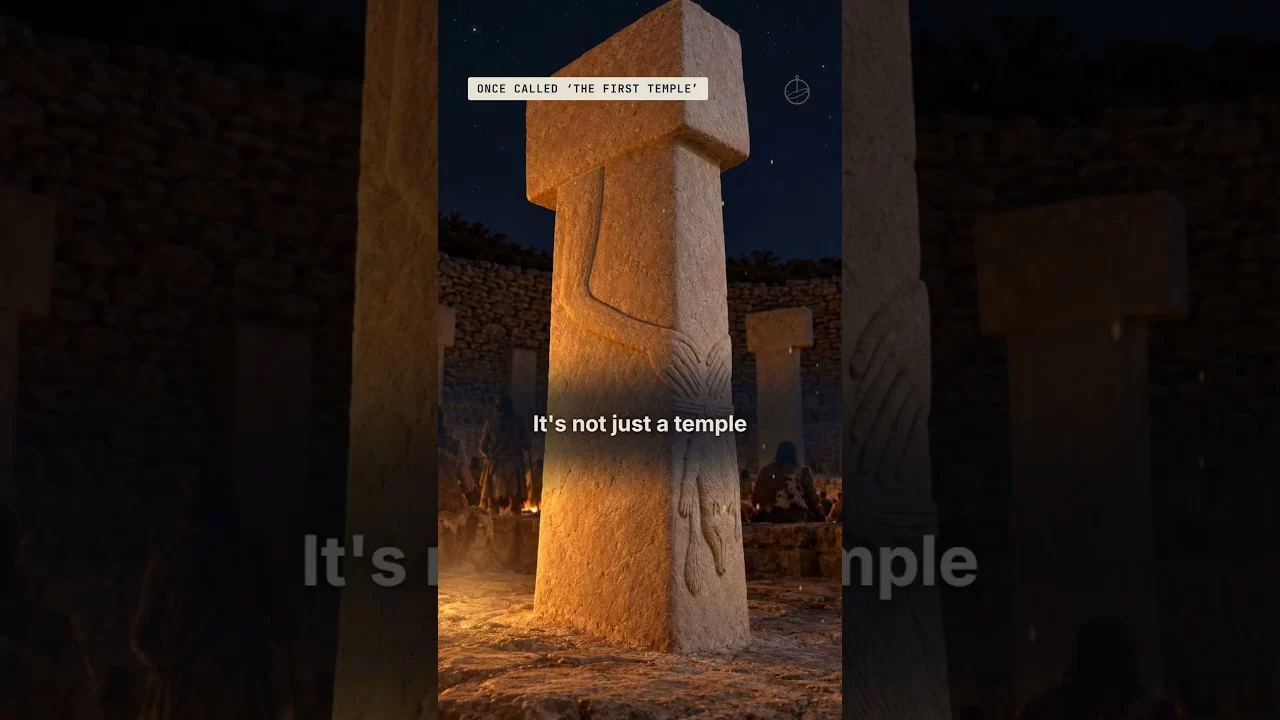
Around 9600 BC — roughly 7,000 years before the Great Pyramid and 6,000 before Stonehenge — hunter-gatherers in what is now southeastern Türkiye carved and raised massive T-shaped stone pillars at Göbekli Tepe. They had no pottery, no metal, no writing and no farms. Yet they built monuments.
The site, near Şanlıurfa, is one of the most important archaeological discoveries of modern times — and it forced historians to rethink where civilization begins.
What is Göbekli Tepe?
Göbekli Tepe is a tell — an artificial mound — holding circular and oval enclosures built from giant T-shaped limestone pillars. The largest stand over five metres tall and weigh many tonnes, and many are carved with vivid reliefs of foxes, boars, snakes, scorpions, vultures and other animals. The oldest layers date to the Pre-Pottery Neolithic, about 9600–8000 BC. Systematic excavation began in 1995 under the German archaeologist Klaus Schmidt with the German Archaeological Institute.
Why it rewrote the story of civilization
The long-standing assumption was that farming came first: agriculture produced surplus food, surplus food allowed towns, and only then could people spare the labour for temples and monuments. Göbekli Tepe reverses that order — monumental, coordinated building by hunter-gatherers appears before farming took hold in the region. Schmidt argued that the act of gathering to build and feast may itself have helped push people toward agriculture: “first the temple, then the city.” That interpretation is debated, and newer research finds signs of everyday and residential life at the site too — but the core fact is secure: complex, organised monument-building existed before pottery, metal, writing or farms.
Just how old is it?
It is hard to overstate the age. Göbekli Tepe predates Stonehenge (around 3000 BC) by some 6,000 years, and the pyramids of Giza (around 2560 BC) by roughly 7,000. It is older than writing, older than the wheel, older than the first cities. When these pillars were raised, the last Ice Age had only just ended.
Most of it is still buried
Geophysical surveys show many more enclosures still hidden under the mound — only a fraction has been excavated. In antiquity the structures were deliberately backfilled, which is part of why they survived so well. Göbekli Tepe was inscribed as a UNESCO World Heritage Site in 2018.
Why it still matters
Göbekli Tepe suggests that shared belief, ritual, or simply the will to gather and build can organise large groups of people before economy and agriculture do — reshaping how we think about the origins of society. It is also a reminder of how much of the human past is still, quite literally, underground.
Key facts
- Age
- oldest layers ~9600 BC (Pre-Pottery Neolithic)
- Where
- near Şanlıurfa, southeastern Türkiye
- What
- circular enclosures of carved T-shaped limestone pillars, some over 5 m tall
- Built by
- hunter-gatherers, before farming, pottery, metal or writing
- Status
- UNESCO World Heritage Site (2018); mostly still unexcavated
Frequently asked questions
How old is Göbekli Tepe?
Its oldest monumental structures date to around 9600 BC — about 11,600 years ago.
Is it really older than the pyramids and Stonehenge?
Yes — by roughly 7,000 and 6,000 years respectively.
Who built it?
Hunter-gatherer communities, before the spread of agriculture in the region.
Related stories: The Thames Frost Fair of 1684 · Pompeii and Vesuvius, 79 AD
Sources & further reading
- UNESCO World Heritage — Göbekli Tepe
- Encyclopaedia Britannica — Göbekli Tepe
- Smithsonian Magazine — Göbekli Tepe
The companion video uses AI-generated reconstructions, not archival footage; any on-screen character is illustrative. The historical details above are drawn from the sources listed.
Keep reading
-

The Great Smog of London, 1952: The Fog That Killed Thousands
For five days in December 1952 a cold fog trapped London's coal smoke, turning the air lethal and killing thousands — and forcing the world's first modern clean-air law.
-

The Scilly Naval Disaster of 1707: Lost Because They Couldn’t Find Longitude
In 1707 a British fleet wrecked on the Isles of Scilly because its navigators could not calculate longitude. The disaster helped launch the search for the marine chronometer.
-
The 1755 Lisbon Earthquake: When the Sea Pulled Back Before the Wave
On 1 November 1755 a great earthquake struck off Portugal, the sea withdrew from Lisbon's harbour, and a tsunami returned to drown a city already shaking and burning.
Comments
Spotted an error? Have a question?