Halley’s Comet, 1910: The Night Earth Flew Through a Comet’s Tail
In 1910 Earth passed through the tail of Halley's Comet. Newspapers warned of poison gas, hucksters sold comet pills — and nothing happened, because a comet's tail is almost nothing at all.
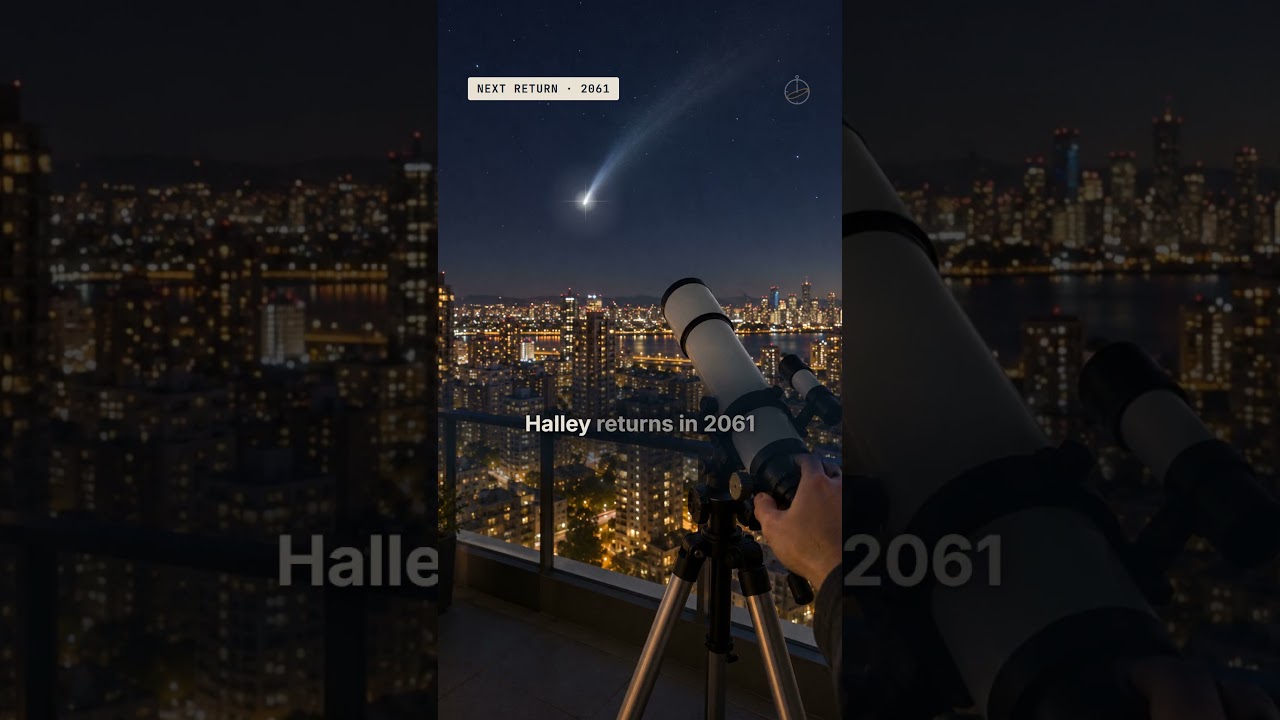
In May 1910, Earth passed directly through the tail of Halley’s Comet — and parts of the public were convinced it was the end of the world.
Astronomers had detected a toxic gas in the tail, newspapers ran scare stories, and swindlers sold “comet pills” and gas masks. The truth: a comet’s tail is so thin it is closer to a vacuum than to air.
What happened
Halley’s Comet returns to the inner Solar System roughly every 76 years, and its 1910 appearance was spectacular. On 18–19 May, Earth was calculated to pass through the comet’s immense tail. Shortly before, spectroscopes had revealed the gas cyanogen in the tail — a compound related to cyanide. That detail, amplified by the press, sparked genuine fear.
The science: a tail of almost nothing
A comet’s tail can stretch tens of millions of kilometres, but it is astonishingly tenuous — the gas and dust are spread so thin that the tail is a better vacuum than anything we can easily make on Earth. The tiny amount of cyanogen that Earth’s atmosphere might encounter was utterly harmless. Astronomers said so clearly at the time; the panic was driven by sensational reporting, not by science.
Fear, profit and a famous coincidence
Opportunists sold anti-comet pills, “comet insurance” and masks to the frightened. The 1910 apparition also carries a literary footnote: the writer Mark Twain was born in 1835, the year of a Halley apparition, and had predicted he would “go out with it” — he died in April 1910, as the comet returned.
What can we learn from the 1910 scare?
The episode is a classic case of a real scientific detail (cyanogen) stripped of context and turned into panic. It is a useful reminder to check what experts actually say before a frightening headline takes hold — a lesson that applies to far more than comets.
Key facts
- Date
- Earth crossed the tail on 18–19 May 1910
- The scare
- cyanogen gas detected in the tail
- The reality
- the tail is near-vacuum and was harmless
- Returns
- Halley’s Comet appears about every 76 years (next in 2061)
Frequently asked questions
Was the comet’s tail actually dangerous?
No. The tail is extremely thin — closer to a vacuum than to air — so the trace of cyanogen posed no threat.
When will Halley’s Comet return?
Around 2061, following its roughly 76-year orbit.
Related stories: The Carrington Event, 1859 · The Tunguska event, 1908
Sources & further reading
The companion video uses AI-generated reconstructions, not archival footage; any single on-screen character is illustrative. The historical details above are drawn from the sources listed.
Keep reading
-
The Thames Frost Fair of 1684: When London Held a Market on a Frozen River
In the winter of 1683–84 the River Thames froze solid for two months and Londoners built a fair on the ice — with a printing press and an ox roast. Here's why it froze then, and can't now.
-

Göbekli Tepe: The 11,600-Year-Old Monument Older Than Stonehenge and the Pyramids
Around 9600 BC, hunter-gatherers in what is now Türkiye raised massive carved stone pillars at Göbekli Tepe — thousands of years before farming, writing, Stonehenge or the pyramids.
-

Chicxulub: The Asteroid That Ended the Age of Dinosaurs
About 66 million years ago a city-sized asteroid hit the Yucatán, triggering the impact winter that wiped out the non-avian dinosaurs and three-quarters of life on Earth.
Comments
Spotted an error? Have a question?